Showing posts with label Kazakhstan. Show all posts

Friday, August 12, 2011

Kyrgyz Release More Water to Fight Kazakh Drought

Reposted from Radio Azattyk (RFE/RL)
by: Zamira Kozhobaeva
style edit: Ryan Weber

At a special meeting in Khokand on August 8, policy makers from Kyrgyzstan, Kazakhstan, Tajikistan and Uzbekistan met to discuss pressing issues of regional water management. Following the meeting, Deputy Chairman of the State Committee on Water Resources and Land Reclamation Chyngyz Uzakbaev spoke with Radio Azattyk.

Radio Azattyk: What are the results of this urgent meeting on regional water management?

Chyngyz Uzakbaev: The talks were devoted to the complicated problem of joint water use. The serious threat of drought due to water shortage looms over South Kazakhstan and the Kyzyl-Orda region of Kazakhstan and southern regions of Uzbekistan, all of which are located in the downstream region of the Syr Darya.

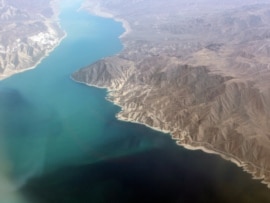
After difficult negotiations, we reached the following agreement: At the request of the Kazakh side, we [Kyrgyzstan] will begin releasing 500 cubic meters of water/second from the Toktogul Reservoie through the Uch-Kurgan HPP [HydroPower Plant]. Due to the extremely hot weather, the Kazakhs asked us to add another 50 cubic meters of water, because they would not otherwise receive the 500 cubic meters of water [due to greater evaporation than normal].

This question is being studied at the governmental level now. Kazakhstan also agreed to buy electricity [from Kyrgyzstan] that will be generated as a result of this water release. Our electricity is tied to exports, and this is a very important issue for us. We asked for a three-day break in the water release, so at this point the beginning on August 9, Tajikistan will release up to 600 cubic meters per second from their Kyra Kum reservoir [to make up the difference].

Thursday, December 16, 2010

Shadow of the Shah: How US policy in Central Asia raises the specter of 1979, and why US diplomats may be making the same mistakes

by Ryan Weber

Two recent articles by non-regional experts have shed an interesting light on US policy in Central Asia. In reading history, as well as a few Wikileaks, they examine what precedents US diplomats may be following as they brazenly cooperate with corrupt regimes. Rather than revealing any new information, what they show is how closely the US continues to follow old patterns - even those with disastrous outcomes. When short-term objectives conflict with long-term ideals like 'freedom' and 'democracy', it is the latter that lose ground. This is not only a problem for ideological purity - a luxury no 'superpower' can afford - but puts more practical long-term needs like regional stability and influence in jeopardy.

For this reason, US willingness to prioritize transit access and basing agreements over progress in human rights and political freedom among Central Asian states serves as a dangerous choice for US policymakers - and they should know better.

Tuesday, November 23, 2010

A Hard Look in the Mirror: Central Asia Scores Poorly on Perception of Corruption


by Ryan Weber

Transparency International Released its 2010 Corruption Perception Index (CPI), and as the regional map shows (above), Central Asia is left looking rather red in the face. On a scale of 0 to 10, in which lower numbers were judged more corrupt by respondents, the regional regimes scored between 2.9 (Kazakhstan) and 1.6 (Uzbekistan & Turkmenistan). Georgia, China and Russia provide some context, with the first two - by no means poster children for anti-corruption - scoring higher than any Central Asian states at 3.8 and 3.5 respectively, while Russia, the dominant political force in the region, held steady with the pack at an embarrassingly low score of 2.1.

The Index, which is compiled from a series of surveys filled out by citizens of each country then averaged and adjusted according to the survey biases, is just one measure, and an admittedly imperfect one, to evaluate the level of corruption active in the everyday, as well as institutional levels of government. Corruption is a difficult concept to define, ranging from police traffic bribes to no-bid government contracting, and even more complicated to track accurately. The index provides a "rough barometer" of public perceptions, captured at the moment they take a survey, and not held against a baseline experience. As such, as the Transparency International website warns,
"The CPI is not a tool that is suitable for trend analysis or for monitoring changes in the perceived levels of corruption over time... Year-to-year changes in a country’s score can result from a change in the perceptions of a country’s performance, or changes in the methodology resulting from TI’s efforts to improve the index." (link)
Well and good, but trend analysis may in fact provide some interesting results when considered in light of the events affecting the various countries, or as a measure of the similar or dissimilar year-by-year corruption perception of citizens from different countries within a shared region. It must still be stressed, what such analysis will show is not the level of corruption in any country, but the perception of corruption among its citizens.