Monday, August 22, 2011

Modern Maginot - Central Asian Oil Pipelines May be Obsolete Before They Pay Off Time, Cost of Construction.

article originally posted on CA-NEWS.org


Central Asia is quickly emerging as a global center of hydrocarbon production, but the ambitious transnational pipelines built to access this oil and natural gas wealth may become obsolete sooner than anticipated.

Since at least the 17th century, the Caspian basin supplied hydrocarbons of one form or another to markets in Europe, the Middle East and Central Asia. Naphtha, kerosene, mazout, petroleum, and now natural gas have all brought international interest and wealth to the otherwise economically underdeveloped region. Local entrepreneurs and foreign investors have made - and lost - fortunes as political, economic and technological changes either emanated from, or swept over, the region.

Today, Azerbaijan, Turkmenistan, Kazakhstan, and Uzbekistan produce substantial amounts of oil and natural gas, and stand to become major hydrocarbon exporters to a global market of increasing demand. This is true for both emerging economies like China and India, as well as energy-intensive developed countries in Europe. The challenge facing modern multi-national corporations and national petrol companies is the same - how to dispose of the region's resource wealth profitably. The best answer to date is to transport these gaseous and liquefied goods to the markets of greatest demand, China and Europe, via long-distance transnational pipelines.

Monday, August 15, 2011

UNEP Report Confirms, Water will be continuing source of Friction in Central Asia

originally posted on CA-News.org (Russian)
by Ryan Weber

photo credit: Flikr/Sarah Olmstead

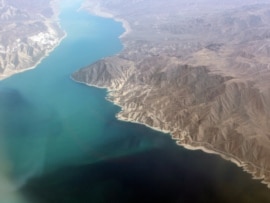
Water is the source of life, but in the Central Asian states along the Amu Darya it has also become a source of current and future strife. Unsustainable water management policies put in place during the Soviet Union continue, without dramatic change, 20 years after independence. In that time, Amu Darya ecosystems were decimated, the Aral Sea virtually disappeared, agriculture is struggling to maintain production levels, and countries are unable to provide citizens’ basic power needs. Even worse, while many of these unprecedented impacts are irreversible, policy makers along the Amu Darya bitterly contest any changes. The predictable result is further degradation and increasing regional tensions.

A new report (PDF) by the Environment and Security Initiative of the United Nations Environment Programme (UNEP) clarifies the nature of these tensions, and provides recommendations for how all parties involved can reach equitable, sustainable solutions. Without favoring one political or economic sector, the report describes how Soviet-level central planning and resource distribution led to the creation of immense irrigations projects in the Uzbek and Turkmen SSRs. This was made possible only by the controlled release of water from massive hydroelectric dams in the ‘upstream’ Tajik and Kyrgyz Republics. In return, these mountainous countries received electricity and fuels from their water-hungry, but energy-rich, neighbors during the harsh months of winter. There was no need to quantify or justify such exchanges, nor any need to design infrastructure for the individual Republics that could function independently. That is, not until the collapse of the Soviet Union.

Friday, August 12, 2011

Kyrgyz Release More Water to Fight Kazakh Drought

Reposted from Radio Azattyk (RFE/RL)
by: Zamira Kozhobaeva
style edit: Ryan Weber

At a special meeting in Khokand on August 8, policy makers from Kyrgyzstan, Kazakhstan, Tajikistan and Uzbekistan met to discuss pressing issues of regional water management. Following the meeting, Deputy Chairman of the State Committee on Water Resources and Land Reclamation Chyngyz Uzakbaev spoke with Radio Azattyk.

Radio Azattyk: What are the results of this urgent meeting on regional water management?

Chyngyz Uzakbaev: The talks were devoted to the complicated problem of joint water use. The serious threat of drought due to water shortage looms over South Kazakhstan and the Kyzyl-Orda region of Kazakhstan and southern regions of Uzbekistan, all of which are located in the downstream region of the Syr Darya.

After difficult negotiations, we reached the following agreement: At the request of the Kazakh side, we [Kyrgyzstan] will begin releasing 500 cubic meters of water/second from the Toktogul Reservoie through the Uch-Kurgan HPP [HydroPower Plant]. Due to the extremely hot weather, the Kazakhs asked us to add another 50 cubic meters of water, because they would not otherwise receive the 500 cubic meters of water [due to greater evaporation than normal].

This question is being studied at the governmental level now. Kazakhstan also agreed to buy electricity [from Kyrgyzstan] that will be generated as a result of this water release. Our electricity is tied to exports, and this is a very important issue for us. We asked for a three-day break in the water release, so at this point the beginning on August 9, Tajikistan will release up to 600 cubic meters per second from their Kyra Kum reservoir [to make up the difference].

Wednesday, July 20, 2011

Rate of Exchange: The Costs of Democratic Transition in Kyrgyzstan, and Who Picks up the Bill

(image credit RIA Novosti)

the Central Election Commission of the Republic of Kyrgyzstan announced on July 14 that it estimates a cost of 449 Million Kyrgyz Som (KGS) to conduct the upcoming Presidential Elections. The election marks the first change of the top executive since Roza Otunbayeva was selected as Interim/Transitional President in a package vote along with adopting the new Constitution that expressly limits the powers of the President in July 2010.

Otunbayeva has stayed true to her inaugural promise not to seek re-election, and in her absence a who's-who of Kyrgyz politicians have hinted at their intention to run. Currently, there are 14 declared candidates (5 declared last week), the most notable of which is Kamchybek Tashiev of the nationalist Ata-Jurt party. The big name not on the ticket at present is that of Social Democrat (SDPK) Almazbek Atambaev. Both are both current leading figures within the Jogoru Kenesh Parliament - Atambaev as Prime Minister and Tashiev as leader of the largest party in the unicameral legislature.

The new Constitution was written with the express purpose of limiting the authority of the President, and turning Kyrgzystan into a Parliament-dominated Democracy - the first in Central Asia - after two popular uprisings removed strong-arm Presidents in 2005 and 2010. That the most powerful politicians in Parliament are abandoning it to seek the Presidency suggests a possible return to a more empowered Executive.

Thursday, July 14, 2011

Indefinite Deployment: US Neocons Explain Rationale of Never Leaving Kyrgyz Airbase

originally posted on CA-NEWS.org
by Ryan Weber

The US will continue to have a military presence in Kyrgyzstan, perhaps indefinitely, despite plans for a complete withdrawal from Afghanistan by 2014, according to a veteran conservative analyst and former Defense Department staff.

The admission was made on July 6 at an event hosted by the Hudson Institute, a neoconservative Washington, D.C. think tank with a history of promoting US national security interests.

The comments, by Seth Cropsey (pictured), a Senior Fellow at Hudson, and formerly of the Heritage Foundation and the American Enterprise Institute, came in response to an audience question about the future of US-Kyrgyz relations after the end of military operations in Afghanistan, and the presumed closure of the US airbase at Bishkek's Manas International airport. The base, which opened in December 2001 and is now known as the Transit Center at Manas (or Manas TC), has been a lightning rod of controversy since 2005, and more recently figured as an international negotiating chip for then-President Kurmanbek Bakiev to elicit a a six-fold increase in the American's lease, up to $60 million per year in 2009.

US Military and diplomatic envoys have long argued that Manas TC is critical to the Afghan war effort, largely over-shadowing other topics of US-Kyrgyz foreign relations such as economic development, anti-corruption, and Human Rights violations under the current and past administrations.

But according to Cropsey, who is a former Principal Deputy Assistant Secretary of Defense for Special Operations and Low-Intensity Combat, future geopolitical concerns will necessitate a US presence long after the last US troops leave Afghanistan. He specifically cited a nuclear Iran, prolonged Afghan in-fighting, or an aggressive China all as viable justifications for a permanent US presence.


Saturday, June 11, 2011

Going Post-al: US-Central Asia Policy Post-bin Laden

In his lectures and writings, noted political scientist and former NDI Georgia country director, Lincoln Mitchell, has used the term 'Bi-post-al' to refer to US policy toward the region of the Former Soviet Republics because it was rooted strongly in both Post-Soviet and Post-9/11 legacies.

20 years after the jubilant fall of the Berlin wall, and 10 years after the tragic collapse of New York's World Trade Center, the demise (death, or assassination, depending on one's perspective) of Osama bin Laden opens a new chapter in US foreign relations, especially with Central Asia and the Middle East; the Post-bin Laden era.

The question is, does this development, following Mitchell's glib phraseology, put US-Central Asian relations into a 'Tri-Post-al' paradigm, or does it instead herald the end of 'post-alism' altogether?

Consider what is meant when US policymakers refer to the underlying stratagems they employ being based on 'Post-Soviet' or 'Post-9/11' considerations. The former suggested an awareness of the bureaucratic, economic and social vestiges of Soviet central planning, and limited political freedom. In the 20 years that have passed, the Former Soviet Republics have actually taken a diverse number of trajectories, including the wholesale rejection evidenced by the Baltic states as well as the more lenient embrace of former glory and methods found in Belarus or Turkmenistan. All of these modern states, ranging from free democracies with vibrant markets, to closed autocracies, and the more common shades of grey in-between, are equally 'Post-Soviet,' yet US policy differs widely even from Russia to Ukraine. While these states may still, may always, historically be 'Post-Soviet', the term has been stretched so far as to be virtually meaningless today, and likely more so into the future. US foreign policy toward the region is undoubtedly more focused, at least within the past 5-10 years, on its impact on the US 'War on Terror,' and the balance of US-Russia influence (initially, and mistakenly, referred to as the 'New Great Game,' or 'New Cold War').

If the Post-Soviet era is over - and by all accounts, it is so and has been for some time - what of Post-9/11 syndrome? Today, it is difficult to separate the normal considerations of national security, human rights, or due process of law, from the bizarrely overriding paranoia of international terrorist networks, with almost singular focus on al-Qaeda.

Friday, May 27, 2011

The Best We Can: Kyrgyz Government Panel Explains Circumstances, Handling of June 2010 Osh Violence

When the independent panel of international experts you solicit to investigate and report on outbreaks of ethnic violence under your jurisdiction finally issues that report - and cites your provisional government, including specific members of the administration - as at fault for notpreventing or containing the spread of that violence, what's an (Interim) President to do?

Kyrgyzstan's Roza Otunbayeva, a longtime opposition activist turn (post)revolutionary leader, was faced with this challenge recently, when the Kyrgyzstan Inquiry Commission (KIC) she established under OSCE Special Representative to Central Asia Dr. Kimmo Kiljunen published its report on the June 2010 conflict in Southern Kyrgyzstan on May 3.

The report, which generally echoed similar reports by Human Rights Watch and the International Crisis Group, could not identify specific protagonists of the violence, but did cite multiple instances at local, municipal and national levels where inaction by the newly-formed government was conducted to such a degree as to constitute culpability.

The issue went off like a bomb in Kyrgyzstan's political circles, where (ethno-)nationalist sentiments have been on the rise, especially among the Kyrgyz majority. As Eurasianet's George Camm puts it, Kyrgyz politicians are practically "falling over themselves" to outpace each other in progressively more hyperbolic shows of indignation. In the latest maneuver, the Kyrgyz Parliament - the Jogorku Kenesh - unanimously passed a resolution banning Dr. Kiljunen from entering Kyrgyzstan, ostensibly as a punishment for spreading "scandalous and disreputable" information about the June 2010 attacks that left 470 dead and more than 400,000 displaced - the overwhelming majority being ethnic Uzbek citizens of Kyrgyzstan.

The relative invisibility of Otunbayeva - beloved by the West for her strong international credentials as a champion of human rights and political freedom - only demonstrates how sharp the knife edge of social schisms are within Kyrgyzstan. Otunbayeva became President in the irregular circumstance of the April 7 overthrow of former President Kurmanbek Bakiev, and then won approval via election to remain on as President through 2011 - she is not eligible for reelection in the next vote, set for this October.

In her stead, Otunbayeva dispatched senior officials on an international tour to refute the KIC report and issue their own criticisms of its findings, methodology and recommendations. On May 24, this panel visited Washington, DC, and after a US Congressional hearing the prior day, read remarks and gave an on-the-record Q-and-A session hosted by the National Democratic Institute, with Laura Jewett, NDI Eurasia Director, as moderator.

Monday, May 23, 2011

Clouded Transparency: Kyrgyz Government Responds to KIC Report on June 2010 Osh Violence

::This is the second post on the continuing fallout of the June 2010 violence in Southern Kyrgyzstan. ::

On May 3, the international Kyrgyzstan Inquiry Commission (KIC), which was tasked by Kyrgyz President Roza Otunbayeva to investigate and report on the ethnic violence that swent Southern Kyrgyzstan in June 2010, issued its final report. Those findings included verification of many of the worst accusations made against state authorities - that Kyrgyz police and military contributed, at least through complacency, to the escalation of the violence; the law enforcement officials tortured suspects in order to gain or influence testimony; that post-conflict prosecutions by state officials have unduly targeted ethnic minority defendants; that certain high-ranking local and national officials were directly responsible for allowing the violence to continue.

It put the Kyrgyz Government in a difficult spot - President Otunbayeva specifically asked for the report from a specially-convened panel of international experts in order to raise the findings of the commission above reproach. Now, Otunbayeva's government wanted to do just that.

The response by government officials has run from thinly-veiled dismissal of the commission's methodology to outright refusal to acknowledge the findings- a debate currently raging within the Kyrgyz parliament. (update: on May 26, Parliament actually voted 95-0 to ban the head of the commission, Dr. Kimmo Kiljunen, from Kyrgyzstan permanently for what it describes as a biased report the incites further ethnic tension).

Among the more measured reactions is a 30-page, 111-point refutation and comments issued by the government which are now being presented and defended internationally by members of the administration (complete text in English).

While these comments begin benignly, "The Kyrgyz Government consider that the KIC was able to collect significant evidence via a comprehensive and objective approach. The KIC conducted an unbiased investigation which permitted a thorough and useful analysis...", they quickly turn ugly.

Sunday, April 10, 2011

Taken Aback: International Commission on June 2010 Osh Violence Issues Stunning Report

::This is the first in a 3-part series on the continuing fallout of the June 2010 violence in Southern Kyrgyzstan. We begin with a report published on April 1, 2011 by an international commission on the June 2010 violence in Southern Kyrgyzstan, and future posts will cover the Government's official response to that report, and finally a panel discussion hosted by the National Democratic Institute in Washington, DC on May 24, 2011 including several members of the Kyrgyz administration and parliament. ::

Just two months after the political upheaval that swept former President of Kyrgyzstan Kurmanbek Bakiev out of power in April 2010, the new so-called 'Provisional Government' was faced with its own violent crisis in the Southern regions of Osh and Jalalabad. The exact account of what took place June 10-14 remains a hot topic in international circles, and is practically radioactive in a domestic environment of increasing ethno-nationalism and regional tension.

To address the ferocious and conflicting accusations that circulated in Kyrgyzstan following the violence, then-Interim President Roza Otunbayeva requested the formation of a special international commission to thoroughly investigate, document, and analyze the conflict in a manner that would be unbiased, transparent, and - she hoped - reconciliatory. She chose Dr. Kimmo Kiljunen, Special Representative to Central Asia from OECD to head the resulting "Independent International Commission of Inquiry in the Events in Southern Kyrgyzstan in June 2010" - more commonly referred to as the Kyrgyzstan Inquiry Commission, or just KIC.

Tuesday, February 15, 2011

Historian Alexander Knyazev on Current Events in Kyrgyzstan, their Historical Roots, and Likely Outcomes

Reposted from Gazeta.kg, originally published on Polit.kg.
Interview by Hilarion Zvyagintsev
Translation by Google/style edit by Ryan Weber

As part of the "Sharp Corners" series which focuses on the portrayal of Kyrgyz history in school textbooks, Polit.kg interviewed prominent historian Alexander Knyazev, Ph.D [of the Kyrgyz Slavic University, Bishkek]. The conversation quickly moved past the works of Osmonov and other pseudo-historians, and ultimately dealt with the connection of the past, present, and prospects for the future state of Kyrgyzstan.


Hilarion Zvyagintsev: In your opinion, what role does the Kyrgyz ethnic group play in the history of Kyrgyzstan? Why has this subject become such a fixture in today's debates?


Alexander Knyazev:- Ethnocentricity in the interpretation and teaching of history is largely the result of compromise among the unprincipled parts of the scientific community. At the turn of the 1980s and 90s, when the idea of ethnocentrism began to dominate - how this dishonored the academic community of the [Kyrgyz] Republic will be discussed - many just began to go along [with this narrative]. This is particularly noticeable in the proclamation of the 2,200th anniversary of Kyrgyz statehood, the 3,000th anniversary of Osh, and the question of the historicity of Manas as a person. It is characterized by lack of professionalism among our scientists. No profession can exist without lapses in professional ethics, but it's wrong to change [the way we write] history in favor of short-term interests. This causes harm and does not bring any benefit, and in a multicultural society - even more so. In a context where the socio-economic situation does not allow most people to travel outside the republic, not only young people, a huge part of society formed a provincial consciousness, ideology, limited to the extent of Kyrgyzstan and the myths operating here.

Tuesday, January 4, 2011

2010 Kyrgyz 'Anti-Hero' Awards

Repost from News Agency 24.kg
written by Daniyar Karimov
edited by Ryan Weber


Every year, thousands of organizations around the world hold their own year-end contests. Usually, as an exercise of vanity, they endeavor to name the "best" people in their respective field. Kyrgyzstan is no exception. We lavish diplomas, ranks, and honorable titles on politicians, public figures, and cultural artists.

News Agency 24.kg wanted to join in, but no to be banal, decided to hold a contest by contradiction: to find out who deserves the title as among the worst people of the last year.

Events of the last 12 months demonstrated that a lot of people, out of the former and current political limelight, deserve to be nominated for the (dis)honorable title of “Antihero.” In order to make the list manageable, we decided to limit ourselves to only the most exceptional examples.

In the category of [Kyrgyz] Anti-Hero of 2010, the Nominees are:

Wednesday, December 29, 2010

Post-Vote, Declined Mandates Reshaped Kyrgyzstan’s Legislature

Reposted from Eurasianet.org
by Ryan Weber

Did Kyrgyzstan’s voters get the leaders they chose?

On December 17, the Respublika party announced the successful formation of a new governing coalition to lead Kyrgyzstan’s parliament. This second attempt at forming a majority succeeded where the first failed because Respublika, which led the effort, is unattached to the North/South regional divide or pro-/anti-government legacy of the other four winning parties.

But Respublika is unlike Kyrgyzstan’s other political parties in another way as well -- by the time the party came to power, most of its minorities and women had declined their seats in parliament, leaving a 100 percent ethnic Kyrgyz and mostly male party.

According to the Kyrgyz electoral code, voters cast ballots for a party’s list of candidates. Based on votes, each party is awarded a certain number of seats that go to the top candidates on their respective party lists. If a candidate declines his “mandate,” then the seat passes to the next highest candidate on his party’s list.

One candidate from Ata-Meken, Joomart Oturbayev, declined his mandate despite being #3 on the party’s list. There are rumors that Ata-Jurt co-chairman Kamchybek Tashiev wanted Dinara Isaeva, wife of former Prime Minister Daniyar Usenov (who is in hiding) and #12 on the Ata-Jurt party list, to decline hers, but she refused. Ata-Jurt, Ar-Namys, and the Social Democrats (SDPK) have not had a single candidate refuse a mandate.

Respublika, on the other hand, has had an incredible 18 mandates -- of its 23 total -- refused by candidates in the party’s top positions.

The combined effect of these voluntary exclusions has been to make Respublika’s parliamentary delegation much less diverse than its original party list -- the list voters elected. Alevtina Zavgorodnyaya (#8) and Yuri Nizovskii (#27), both ethnic Russians, were the only non-Kyrgyz candidates within Respublika’s top 50 positions. After they both declined their mandates, Respublika became the only party in parliament not to have a single non-Kyrgyz delegate. Four women candidates declined to enter parliament for Respublika, though five remained.

The resulting Respublika faction in parliament is exclusively Kyrgyz and 78 percent male -- i.e. not very representative of Kyrgyzstan as a whole.

Tuesday, December 28, 2010

No Thank You: Many Respublika Candidates Refused Mandates

by Ryan Weber

Though not yet much reported, something odd took place in the 2010 Kyrgyz Parliamentary elections. It occurred after all the votes were tabulated, but before the new MPs were sworn in.

It wasn't fraud per se, nor was it at all illegal. Instead, it was the unusual expansion of a common, but usually isolated, practice of elected party candidates declining to accept a seat in parliament (their "mandate") on behalf of their party.

But this time, candidates from the Respublika party exercised their right to decline the mandates at an incredible rate.

Further analysis will be posted soon, but for now, here is the data which was compiled from Resublika's published election-day party listand the final list of sworn MPs issued by the Central Election Committee (CEC).

Party List #, Name, Ethnicity, Mandate Decision
  1. Babanov, Omurbek - Kyrgyz - Accepted, MP#1
  2. Alimbekov, Nurbek - Kyrgyz - Accepted, MP#2
  3. Pirmatov, Ishaq - Kyrgyz - Accepted, MP#3
  4. Sultanbekova, Cholpon - Kyrgyz - Accepted, MP#4
  5. Isaev, Kanatbek - Kyrgyz - Accepted, MP#5
  6. Torobaev, Bakyt - Kyrgyz - Accepted, MP#6
  7. Sulaimanov, Altynbek - Kyrgyz - Accepted, MP#7
  8. Zavgorodnyaya, Alevtina - Russian - DECLINED
  9. Moldobaev, Askhat - Kyrgyz - DECLINED
  10. Baatyrbekov, Almazbek - Kyrgyz - Accepted, MP#8
  11. Esenamanov, Zamirbek - Kyrgyz - DECLINED
  12. Aknazarova, Rosa - Kyrgyz - Accepted, MP#9
  13. Boko, Kenjebek - Kyrgyz - Accepted, MP#10
  14. Aripov, Nazarali - Kyrgyz - Accepted, MP#11
  15. Turuskulov, Jyrgalbek - Kyrgyz - DECLINED
  16. Djumaliev, Elmira - Kyrgyz - Accepted, MP#12
  17. Obdunov, Elmurat - Kyrgyz - Accepted, MP#13
  18. Kadyrkulov, Iskender - Kyrgyz - DECLINED
  19. Osmonov, Malik - Kyrgyz - Accepted, MP#14
  20. Amanbaeva, Urulkan - Kyrgyz - Accepted, MP#15
  21. Arym, Kubat - Kyrgyz - DECLINED
  22. Aitmatov, Kushtarbek - Kyrgyz - Accepted, MP#16
  23. Shaynazarov, Tynchtyk - Kyrgyz - Accepted, MP#17
  24. Omurbekova, Altynai - Kyrgyz - Accepted, MP#18
  25. Andash, Turatbek - Kyrgyz - DECLINED
  26. Ismailov, Ulanbek - Kyrgyz - DECLINED
  27. Nizovskii, Yuri - Russian - DECLINED
  28. Shayymkulova, Ainura - Kyrgyz - DECLINED
  29. Jolbolduev, Pamirbek - Kyrgyz - DECLINED
  30. Bakirov, Mirlan - Kyrgyz - Accepted, MP#19
  31. Oskonbaev, Beyshenbek - Kyrgyz - DECLINED
  32. Alimzhanova, Damir - Kyrgyz - DECLINED
  33. Asylbek, uulu Damirbek - Kyrgyz - DECLINED
  34. Duyshenbiev, Nursultan - Kyrgyz - DECLINED
  35. Murashev, Nurbek - Kyrgyz - Accepted, MP#20
  36. Dzhumabekova, Akylsayra - Kyrgyz - DECLINED
  37. Bekmatov, Abdyjapar - Kyrgyz - Accepted, MP#21
  38. Zakirov, Asylbek - Kyrgyz - DECLINED
  39. Sabirov, Maksat - Kyrgyz - Accepted, MP#22
  40. Sagynbaeva, Gulifa - Kyrgyz - DECLINED
  41. Rezhavaliev, Abdulatipov - Kyrgyz - Accepted, MP#23

What Mystery? US Probe reveals Bribery, Corruption, Incompetence... and No Ethics Violations?

by Ryan Weber

A new report from the US Congress highlights Pentagon malpractice in its fuel supply contracting in Kyrgyzstan. As the details of the report filter out, clear repurcussions are ahead for the companies involved, the US Afghan war effort, and the future of US-Kyrgyz relations. What remains obscure is how US government contracting could be conducted to such poor standards for so long, and how the new report justifies its assertion that corruption - in the form of bribes and other kick-backs to former Kyrgyz regimes - was not part of the problem.

Background

On December 21, the US House of Representatives Oversight Subcommittee on National Security and Foreign Affairs issued its final report on an 8-month investigation into US fuel supply contacts for the Manas Transit Center in Bishkek, Kyrgyzstan. Situated on the grounds of the country's main international airport, within line-of-sight of commercial travelers, Manas ferries troops and supplies to Afghanistan as part of the Northern Distribution Network (NDN) .

When it was originally leased in December 2001, the US offered an aid package to the Kyrgyz government of Aksar Akayev totaling just over $2 million, a large portion of which went directly to Akayev's son, Aydar. Since then, two governments have fallen - Akayev's, and his 'revolutionary' successor Kurmanbek Bakiev - but Manas remains, first with an increase to $17 million annual rent in 2005, and now with a $63 million annual rent established in summer 2009. (See expert Alex Cooley's "Manas Matters" article for the above figures)

Thursday, December 23, 2010

Skin & Bones: The Structure of the new Kyrgyz Parliament


by Ryan Weber

"It's fun to write about an ACTUAL Kyrgyz government instead of a hypothetical one."
-Jax Jacobsen, reporter for Central Asia Newswire, in a tweet on December 20th, 2010

With the December 17 announcement of a successful majority coalition agreement, the Kyrgyz Jogorku Kenesh parliament can finally get to the business of governing the Republic after more than 2 months of political stalemate. Following the results of the October 10 elections, 5 parties entered the 120-seat parliament, all far short of the 60 seats necessary to appoint a Prime Minister and other top positions. Ata-Jurt, the largest party, controlled just 28 seats, while Ata-Meken was the smallest with 18.

The successful coalition - even more impressive following the instantaneous collapse of the first such effort led by the Social Democrats (SDPK) - was undertaken by the Respublika party, and included 'pro-grovernment' SDPK as well as the nationalist-tinged Ata-Jurt.

Ata-Meken and Ar-Namys went into the opposition, but are unlikely to caucasus given their radically different positions on domestic and foreign policy. The same could be said of the relationship between SDPK and Ata-Jurt, though the coalition agreement suggests they may have found ways to compromise.

In rapid succession, the new coalition was able to fulfill its mandate by electing the new government's top leadership. Almazbek Atambaev of SDPK becomes Prime Minister (92 votes), Omurbek Babanov of Respublika becomes Deputy Prime Minister (88 votes), and Akhmat Khelidbekov of Ata-Jurt becomes Speaker of Parliament (101 votes).

All three positions are newly-empowered by the 2010 Kyrgyz Constitution, which elevates Parliamentary executives over the Kyrgyz President for the first time in the country's 20 years of independence.

Wednesday, December 22, 2010

Putting on a Show: Friends, Enemies & 'Frenemies' in Kyrgyz Politics

December 20, 2010, Bishkek – 24.kg News Agency
written by Asel Otorbayeva
style edit by Ryan Weber


Once again, Kyrgyz politicians place the importance of assigning government positions over actual governing.


Old Political Enemies

In its second attempt, the Kyrgyz parliament finally succeeded in electing a speaker. Their choice was the leader of the party [Ata-Jurt] which previously called for the return of ousted President Bakiev [actually, a rumor], and is comprised of many former allies to the fallen President.

Opponents [of Ata-Jurt] were highly critical of its intentions in the run-up to Parliamentary elections in October, charging it with a variety of "sins." Some even suggested members of Ata-Jurt helped instigate the June riots in Osh the ignited ethnic tension [and in several ways increased Ata-Jurts Nationalist rhetoric going into the election]. But the accusations against Ata-Jurt were never proven, and the other parties dropped attempts to link Ata-Jurt with the violence. Being veteran politicians, rather than defend themselves, Ata-Jurt enlisted [Kyrgyz] victims of the June events to protect their reputation.

Relatives of those killed during the April coup that removed Bakiev responded passionately to the former Bakiev administrators, [throwing eggs and] attempting to block their admittance to the new parliament. They demanded that such politicians never participate in government again, but the other ["pro-government"] parties did nothing to block their participation [such as passing a controversial Lustration law]. After a while, the general public acquiesced. [Respublika] party - as if it had forgotten the public distaste for Ata-Jurt - instructed the Social Democrat party (SDPK) to "make friends" with Ata-Jurt. They explained that economic concerns must trump personal animosity.

Now Almazbek Atambayev, SDPK leader and [recently-elected] Prime Minister must find a way to work with Akhmatbek Kelidbekov - the new Speaker of Parliament from Ata-Jurt. Whether they want to or not, their cooperation is vital for any progress [in Kyrgyzstan].

Friday, December 17, 2010

Take Two: Kyrgyzstan Finally Has New Government

Newly-elected Kyrgyz Prime Minister Almazbek Atambaev (at center) joined by Omurbek Babanov (sans tie) and other members of the successful majority coalition that finally gave Kyrgyzstan a functional government on December 17. (photo credit S. Dosalieva, AKI Press)

Three of Kyrgyzstan’s quarreling parties have finally succeeded – after two months and one failed attempt – to form a government. The partnership may seem an unlikely one, but it unifies the country’s fractious north and southand all hopes are on this group to shepherd the country safely into a new year without political instability and violence.
Parliament convened on December 17 to approve the coalition proposed by Respublika leader Omurbek Babanov. Provisional President Roza Otunbayeva chose Babanov to lead the process on December 4, after the first attempt by her Social Democratic Party’s (SDPK) Almazbek Atambayev, fell through.

This coalition looks much like the first, botched one, with a stark exception. In place of the pro-Otunbayeva Ata-Meken party, it includes the nationalist Ata-Jurt party, whose Myktybek Abdyldayev will take the speaker position; Atambayev has assumed the premiership. Together with Respublika, the coalition holds 77 of the legislature’s 120 seats, a comfortable majority.

Thursday, December 16, 2010

Shadow of the Shah: How US policy in Central Asia raises the specter of 1979, and why US diplomats may be making the same mistakes

by Ryan Weber

Two recent articles by non-regional experts have shed an interesting light on US policy in Central Asia. In reading history, as well as a few Wikileaks, they examine what precedents US diplomats may be following as they brazenly cooperate with corrupt regimes. Rather than revealing any new information, what they show is how closely the US continues to follow old patterns - even those with disastrous outcomes. When short-term objectives conflict with long-term ideals like 'freedom' and 'democracy', it is the latter that lose ground. This is not only a problem for ideological purity - a luxury no 'superpower' can afford - but puts more practical long-term needs like regional stability and influence in jeopardy.

For this reason, US willingness to prioritize transit access and basing agreements over progress in human rights and political freedom among Central Asian states serves as a dangerous choice for US policymakers - and they should know better.

Tuesday, December 14, 2010

Who Will Become Author of Kyrgyz Political Default?

Reposted from News Agency 24.kg
Bishkek - December 14, 2010
(0913 hrs)
written by Asel Otorbayeva
style edit by Ryan Weber


In the throes of giving birth to a parliamentary majority coalition, Kyrgyzstan may suffer a second miscarriage. The reason is obvious - excessive greed [by party leaders] for key positions in the future parliament.


Which Prime Minister is Best?

The main battle area among the five parties appears to be for the top spot [in the restructured Kyrgyz] government. Leaders of Social Democratic Party of Kyrgyzstan (SDPK) and Ar-Namys party both want to become Prime Minister. For better or worse, neither are strangers to the political arena - each possessing ample experience as well as political baggage. And neither leader, Almazbek Atambayev of SDPK or Felix Kulov of Ar-Namys, show any sign of willingly stepping aside.

The Respublika party was chosen for the second mandate to form a majority coalition, and its leader, Omurbek Babanov, now faces one of the most difficult challenges of his career. Much younger than the other party leaders, and with less time in politics, he is finding it difficult to compete. His most persuasive arguments are unable to overcome the [entrenched] SDPK or the "iron shield" of Ar-Namys. It is no secret that ambitions for the Prime Minister position are entwined with hopes for the 2011 Presidential election. SDPK and Ar-Namys both aspire to the presidency, and controlling the Prime Minister may be a necessary 'trump card' for that effort.


Speaker’s Throne as Alternative

[Realizing that the new Kyrgyz Constitution dramatically increases the power of parliament, the position of Speaker of Parliament has become much more valuable. Now, not only the leader of the Ata-Meken party, [Omurbek Tekebaev] aspires to the post [he once held], but also members of Respublika, Ar-Namys, and Ata-Zhurt's co-chairman, Akhmatbek Kelidbekov.

According to the Constitution, which Tekebaev authored, tremendous authority resides in the hands of the Speaker. Deputies of the fifth convocation - the current parliament - seem unaware of the trap inherent in Tekebaev's government structure. He "planted a bomb with a clock mechanism continuously ticking like a reminder: the Prime Minister and the Speaker shall, as Siamese twins, breathe, sleep and most importantly - work in unison. Otherwise - [say] goodbye to the coalition, and hello [to the] dissolution of parliament!"

Assuming Felix Kulov steps aside, and his sworn [enemy] Atambaev becomes Prime Minister. How well can Atambaev work with [Speaker] Kelidbekov? Will this arrangement have a [viable] future? Of course not. And what about another combination - Speaker Kulov and Prime Minister Atambaev?

Whatever the experts say about the necessity or political wisdom of regional balance [i.e. the inclusion of Ata-Jurt as a "Southern" party along with the other, predominantly "Northern" factions] to the long-term stability of state, most of the existing coalitions are [destined to be] short-lived.

Monday, December 13, 2010

Waiting for Parliament and a Kyrgyz Santa Claus

by Ryan Weber

For those of us anxiously waiting to see what sort of governing coalition will emerge from the Kyrgyz parliamentary negotiations, it's beginning to feel more and more like we may be waiting for a 'Godot' - the fictional character in Samuel Beckett's drama who, (in)famously, never arrives. Or perhaps, with the December 24 deadline for the formation of the next parliamentary coalition, it's up to the equally-fictional Santa Claus to finally bring resolution to the Kyrgyz political situation.

After requiring the full 15 working day period allowed by the constitution, the SDPK-Respublika-AtaMeken coalition failed to elect Omurbek Tekebaev as Speaker of Parliament on December 2. Since the coalition agreement was based on the awarding of the Speaker position to Tekebaev, as well as the Prime Ministership to SDPK leader Almazbek Atambaev, and Deputy PM to Respublika's Omurbek Babanov, the coalition couldn't enforce its contract, and thus dissolved. With 67 nominal coalition members in the 120-seat legislature, the surprising defeat with just 58 votes for Tekebaev demonstrated the practical, as well as theoretical, shortcomings of the agreement. Just days after signing a pact of solidarity, coalition members voted against their own coalition.

On December 3, an embarrassed Atambaev asked Kyrgyz President Roza Otunbayeva to select another party to form the coalition. Originally, Otunbayeva said Ata-Meken, as the other "pro-government" party, would be tasked with the duty if SDPK failed. Instead, whether because Tekebaev declined the opportunity, or Otunbayeva reacted to his apparent unpopularity, Omurbek Babanov and Respublika were given the charge along with a new deadline - December 24.

With the race to form a coalition once again wide open - with rumors that perhaps 4, or even all 5 political parties will join together - the possible make up of the ruling Kyrgyz government remains an item of intense, if largely uninformed, speculation.