Monday, August 15, 2011

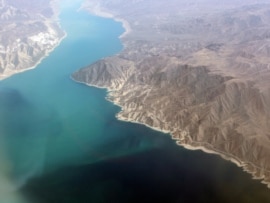
UNEP Report Confirms, Water will be continuing source of Friction in Central Asia

originally posted on CA-News.org (Russian)
by Ryan Weber

photo credit: Flikr/Sarah Olmstead

Water is the source of life, but in the Central Asian states along the Amu Darya it has also become a source of current and future strife. Unsustainable water management policies put in place during the Soviet Union continue, without dramatic change, 20 years after independence. In that time, Amu Darya ecosystems were decimated, the Aral Sea virtually disappeared, agriculture is struggling to maintain production levels, and countries are unable to provide citizens’ basic power needs. Even worse, while many of these unprecedented impacts are irreversible, policy makers along the Amu Darya bitterly contest any changes. The predictable result is further degradation and increasing regional tensions.

A new report (PDF) by the Environment and Security Initiative of the United Nations Environment Programme (UNEP) clarifies the nature of these tensions, and provides recommendations for how all parties involved can reach equitable, sustainable solutions. Without favoring one political or economic sector, the report describes how Soviet-level central planning and resource distribution led to the creation of immense irrigations projects in the Uzbek and Turkmen SSRs. This was made possible only by the controlled release of water from massive hydroelectric dams in the ‘upstream’ Tajik and Kyrgyz Republics. In return, these mountainous countries received electricity and fuels from their water-hungry, but energy-rich, neighbors during the harsh months of winter. There was no need to quantify or justify such exchanges, nor any need to design infrastructure for the individual Republics that could function independently. That is, not until the collapse of the Soviet Union.

Friday, August 12, 2011

Kyrgyz Release More Water to Fight Kazakh Drought

Reposted from Radio Azattyk (RFE/RL)
by: Zamira Kozhobaeva
style edit: Ryan Weber

At a special meeting in Khokand on August 8, policy makers from Kyrgyzstan, Kazakhstan, Tajikistan and Uzbekistan met to discuss pressing issues of regional water management. Following the meeting, Deputy Chairman of the State Committee on Water Resources and Land Reclamation Chyngyz Uzakbaev spoke with Radio Azattyk.

Radio Azattyk: What are the results of this urgent meeting on regional water management?

Chyngyz Uzakbaev: The talks were devoted to the complicated problem of joint water use. The serious threat of drought due to water shortage looms over South Kazakhstan and the Kyzyl-Orda region of Kazakhstan and southern regions of Uzbekistan, all of which are located in the downstream region of the Syr Darya.

After difficult negotiations, we reached the following agreement: At the request of the Kazakh side, we [Kyrgyzstan] will begin releasing 500 cubic meters of water/second from the Toktogul Reservoie through the Uch-Kurgan HPP [HydroPower Plant]. Due to the extremely hot weather, the Kazakhs asked us to add another 50 cubic meters of water, because they would not otherwise receive the 500 cubic meters of water [due to greater evaporation than normal].

This question is being studied at the governmental level now. Kazakhstan also agreed to buy electricity [from Kyrgyzstan] that will be generated as a result of this water release. Our electricity is tied to exports, and this is a very important issue for us. We asked for a three-day break in the water release, so at this point the beginning on August 9, Tajikistan will release up to 600 cubic meters per second from their Kyra Kum reservoir [to make up the difference].

Wednesday, July 20, 2011

Rate of Exchange: The Costs of Democratic Transition in Kyrgyzstan, and Who Picks up the Bill

(image credit RIA Novosti)

the Central Election Commission of the Republic of Kyrgyzstan announced on July 14 that it estimates a cost of 449 Million Kyrgyz Som (KGS) to conduct the upcoming Presidential Elections. The election marks the first change of the top executive since Roza Otunbayeva was selected as Interim/Transitional President in a package vote along with adopting the new Constitution that expressly limits the powers of the President in July 2010.

Otunbayeva has stayed true to her inaugural promise not to seek re-election, and in her absence a who's-who of Kyrgyz politicians have hinted at their intention to run. Currently, there are 14 declared candidates (5 declared last week), the most notable of which is Kamchybek Tashiev of the nationalist Ata-Jurt party. The big name not on the ticket at present is that of Social Democrat (SDPK) Almazbek Atambaev. Both are both current leading figures within the Jogoru Kenesh Parliament - Atambaev as Prime Minister and Tashiev as leader of the largest party in the unicameral legislature.

The new Constitution was written with the express purpose of limiting the authority of the President, and turning Kyrgzystan into a Parliament-dominated Democracy - the first in Central Asia - after two popular uprisings removed strong-arm Presidents in 2005 and 2010. That the most powerful politicians in Parliament are abandoning it to seek the Presidency suggests a possible return to a more empowered Executive.

Thursday, July 14, 2011

Indefinite Deployment: US Neocons Explain Rationale of Never Leaving Kyrgyz Airbase

originally posted on CA-NEWS.org
by Ryan Weber

The US will continue to have a military presence in Kyrgyzstan, perhaps indefinitely, despite plans for a complete withdrawal from Afghanistan by 2014, according to a veteran conservative analyst and former Defense Department staff.

The admission was made on July 6 at an event hosted by the Hudson Institute, a neoconservative Washington, D.C. think tank with a history of promoting US national security interests.

The comments, by Seth Cropsey (pictured), a Senior Fellow at Hudson, and formerly of the Heritage Foundation and the American Enterprise Institute, came in response to an audience question about the future of US-Kyrgyz relations after the end of military operations in Afghanistan, and the presumed closure of the US airbase at Bishkek's Manas International airport. The base, which opened in December 2001 and is now known as the Transit Center at Manas (or Manas TC), has been a lightning rod of controversy since 2005, and more recently figured as an international negotiating chip for then-President Kurmanbek Bakiev to elicit a a six-fold increase in the American's lease, up to $60 million per year in 2009.

US Military and diplomatic envoys have long argued that Manas TC is critical to the Afghan war effort, largely over-shadowing other topics of US-Kyrgyz foreign relations such as economic development, anti-corruption, and Human Rights violations under the current and past administrations.

But according to Cropsey, who is a former Principal Deputy Assistant Secretary of Defense for Special Operations and Low-Intensity Combat, future geopolitical concerns will necessitate a US presence long after the last US troops leave Afghanistan. He specifically cited a nuclear Iran, prolonged Afghan in-fighting, or an aggressive China all as viable justifications for a permanent US presence.


Saturday, June 11, 2011

Going Post-al: US-Central Asia Policy Post-bin Laden

In his lectures and writings, noted political scientist and former NDI Georgia country director, Lincoln Mitchell, has used the term 'Bi-post-al' to refer to US policy toward the region of the Former Soviet Republics because it was rooted strongly in both Post-Soviet and Post-9/11 legacies.

20 years after the jubilant fall of the Berlin wall, and 10 years after the tragic collapse of New York's World Trade Center, the demise (death, or assassination, depending on one's perspective) of Osama bin Laden opens a new chapter in US foreign relations, especially with Central Asia and the Middle East; the Post-bin Laden era.

The question is, does this development, following Mitchell's glib phraseology, put US-Central Asian relations into a 'Tri-Post-al' paradigm, or does it instead herald the end of 'post-alism' altogether?

Consider what is meant when US policymakers refer to the underlying stratagems they employ being based on 'Post-Soviet' or 'Post-9/11' considerations. The former suggested an awareness of the bureaucratic, economic and social vestiges of Soviet central planning, and limited political freedom. In the 20 years that have passed, the Former Soviet Republics have actually taken a diverse number of trajectories, including the wholesale rejection evidenced by the Baltic states as well as the more lenient embrace of former glory and methods found in Belarus or Turkmenistan. All of these modern states, ranging from free democracies with vibrant markets, to closed autocracies, and the more common shades of grey in-between, are equally 'Post-Soviet,' yet US policy differs widely even from Russia to Ukraine. While these states may still, may always, historically be 'Post-Soviet', the term has been stretched so far as to be virtually meaningless today, and likely more so into the future. US foreign policy toward the region is undoubtedly more focused, at least within the past 5-10 years, on its impact on the US 'War on Terror,' and the balance of US-Russia influence (initially, and mistakenly, referred to as the 'New Great Game,' or 'New Cold War').

If the Post-Soviet era is over - and by all accounts, it is so and has been for some time - what of Post-9/11 syndrome? Today, it is difficult to separate the normal considerations of national security, human rights, or due process of law, from the bizarrely overriding paranoia of international terrorist networks, with almost singular focus on al-Qaeda.